
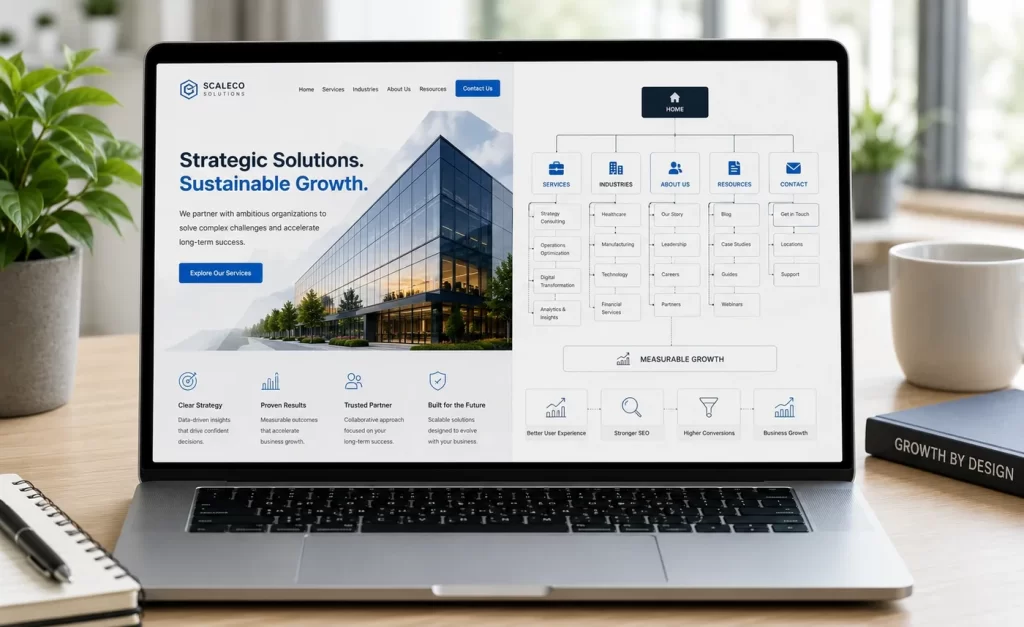
A lot of small business websites are built to solve today’s problem: get something live, list the services, add a contact form. That approach works — until the business grows and the site can’t keep up.
Plan for Pages You Don’t Have Yet
A site built with a rigid, one-off structure often requires a rebuild the moment a business adds a new service, opens a new location, or wants a dedicated page for a specific audience. A site built with a flexible page structure from the start can simply add new pages without disrupting what’s already working.
Navigation Should Scale Without Becoming Cluttered
Five services in a navigation menu looks clean. Fifteen services crammed into the same menu without categories or structure looks overwhelming. Good site structure plans for growth in the number of offerings without sacrificing how easy the site is to navigate.
Content Needs a Home Before It’s Written
Businesses that grow their content over time — blog posts, case studies, location pages — benefit enormously from having that structure planned in advance, rather than bolting on a blog as an afterthought once someone finally decides to start writing.
Technical Structure Matters as Much as Visual Structure
Clean URLs, logical internal linking, and a sitemap that actually reflects how the business is organized all help both visitors and search engines understand a growing site instead of getting lost in it.
Get Started
If your website structure is starting to feel like it’s working against you instead of for you, Omni Media can help rebuild it around where your business is headed, not just where it’s been. Contact us today for a free consultation.